
Upskilling vs Reskilling Strategy in 2026: How to Build a Future-Ready Workforce
Both upskilling and reskilling are essential in 2026, but the right balance depends on your business goals, workforce maturity, and industry disruption. Here’s how leaders decide where to invest.
WORKFORCE DEVELOPMENTDIGITAL TRANSFORMATION
LearningStance
1/5/20263 min read

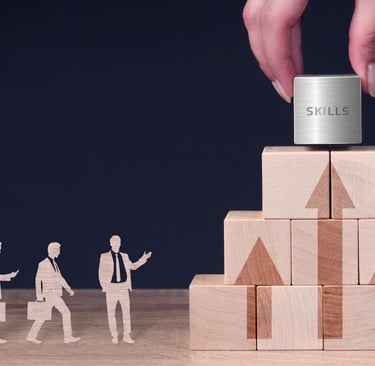
The most important workforce decision leaders face in 2026 is not whether to invest in learning, but how to allocate that investment between upskilling and reskilling. AI, automation, and shifting market expectations are rewriting job roles faster than most organizations can hire for them. According to the World Economic Forum Future of Jobs Report, 44% of core employee skills are expected to change by 2027.
That reality forces a strategic question: Should you upskill existing talent to deepen expertise, or reskill employees for entirely new capabilities. There is no universal answer. The right upskilling vs reskilling strategy depends on your growth plans, workforce maturity, and the speed of disruption in your industry.
What Is the Difference Between Upskilling and Reskilling?
Upskilling: Building Depth
Upskilling strengthens existing capabilities so employees can perform better in their current or adjacent roles. Example: A marketing manager learning advanced analytics or AI tools to improve campaign performance.
Upskilling:
Improves productivity
Enhances role expertise
Supports internal progression
Reskilling: Building Adaptability
Reskilling prepares employees for entirely new roles when business models or technologies shift. Example: A customer support executive transitioning into technical support as automation handles basic queries.
Reskilling:
Enables workforce mobility
Reduces hiring dependency
Future-proofs talent pools
Why Upskilling vs Reskilling Strategy Matters More Than Ever in 2026
AI and Automation Are Redesigning Jobs
Routine, repeatable tasks are increasingly automated. McKinsey estimates that up to 30% of current work activities could be automated by 2030. Organizations must continuously evolve workforce skills to stay competitive.
Digital Transformation Requires New Capabilities
Technology adoption now demands digital fluency across every function, not just IT. According to Deloitte Human Capital Trends, organizations that invest in workforce capability building are significantly more likely to innovate and scale transformation successfully.
Learning Drives Retention
Employees expect visible career progression. The LinkedIn Workplace Learning Report highlights that 94% of employees say they would stay longer at companies that invest in their development. A strong upskilling vs reskilling strategy is therefore both a capability and retention lever.
When to Prioritize Upskilling?
Upskilling is most effective when the business model is stable but evolving.
Prioritize upskilling when:
Employees have strong domain expertise but need new tools or technologies
Productivity and efficiency improvements are a priority
You want to prepare talent for expanded responsibilities
Technology adoption requires capability enhancement
Upskilling strengthens performance without disrupting role continuity.
When Reskilling Is the Right Move?
Reskilling becomes essential during structural change.
Prioritize reskilling when:
Roles are becoming obsolete due to automation
New products, services, or markets are emerging
Hiring costs are rising
High-potential employees can transition into new growth areas
Reskilling allows organizations to redeploy institutional knowledge instead of losing it.
Building a Balanced Upskilling vs Reskilling Strategy
Leading organizations no longer choose between the two. They design integrated skills strategies aligned with business goals.
Key questions to guide decision-making:
Which skills will define competitive advantage in the next 3–5 years?
Where are current capability gaps?
Which roles will evolve or disappear?
How can learning pathways enable internal mobility?
A skills-first workforce strategy grounded in data enables long-term resilience. It will help businesses to future-proof their workforce development while unlocking internal potential.
The Role of Learning Platforms and Strategic Partners
Modern workforce development is not about course libraries. It is about measurable capability growth.
Effective execution requires:
Skills assessments and role mapping
Blended learning design
Technology-enabled analytics
Continuous learning pathways
Organizations often partner with specialists to align learning with business outcomes.
Explore how this approach works within the LearningStance Solutions framework or browse our Blog for deeper strategy insights.
How LearningStance Supports Your Upskilling vs Reskilling Strategy
At LearningStance, we design workforce development programs that integrate:
Skill gap analysis
Role-based learning pathways
Custom content design
LMS integration and analytics
Our goal is simple: ensure learning translates into measurable performance impact.
If you are planning a transformation initiative, connect with us via our Contact Page.
Final Thoughts: Make Skills Your Competitive Advantage
The future of work is already underway. Organizations that treat learning as a strategic capability, not an HR initiative, will outperform their peers. A deliberate upskilling vs reskilling strategy allows businesses to:
Build internal capability
Improve retention
Reduce hiring dependency
Adapt faster to change
Investing in both ensures your workforce grows with your business rather than being left behind by it.
Let’s build a workforce that’s not just ready for change but equipped to lead it.
Contact us to explore how we can support your transformation journey.
Follow us for daily snippets on learning & development:
Instagram | LinkedIn | Facebook
LearningStance
SKILLS ARE SUPERPOWERS.
Contact us
Sign up for Tips & Insights!
business@learningstance.com
+91-8218798070
LearningStance ©2026. All rights reserved.
Quick Links
GSTIN: 05CIBPK1068H1ZJ
Building learning systems and programs that close capability gaps, develop leaders, and connect L&D investment to measurable business performance.
Flagship Programs